HMRC’s 2026 R&D tax credit statistics make for interesting reading. We’re here to give you the latest breakdown.
The total R&D expenditure across the UK has climbed steadily now reaching £46.1 billion in the 2023–24 tax year. That is a number worth pausing on. UK businesses are spending more on innovation than at any point in recent history.
But dig beneath that headline and a more uncomfortable picture emerges. The number of companies actually claiming R&D tax relief has fallen by 26% in a single year, to 46,950 claims. And the money is increasingly concentrated in the hands of large businesses, not the small and medium-sized companies that were supposed to be the backbone of this policy.
That imbalance matters. And it should matter to the Chancellor too.
A Decade of Growth, Then a Sharp Reversal
To understand where we are, it helps to look at where we have been.
For much of the 2010s, R&D tax credit claims grew consistently year on year. From 2016–17 to 2021–22, the number of claims rose from around 39,000 to over 90,000, more than doubling in five years. First-time applicants increased every year prior to 2019–20. The schemes were working. More companies were finding out they qualified, getting supported into the system, and investing in innovation.
Then the reversal began.
First-time applicants started falling from 2019–20 onwards. By 2022–23, new entrants to the SME scheme had dropped 45% in a single year, this was the fourth consecutive annual decline. Total claim volumes followed suit. By 2023–24, the 26% fall in overall claims, and a 31% fall in SME scheme claims specifically, represents the sharpest single-year contraction since the schemes were introduced.
This is not simply a correction. It is a structural shift.
The Money Is Shifting Toward Large Business
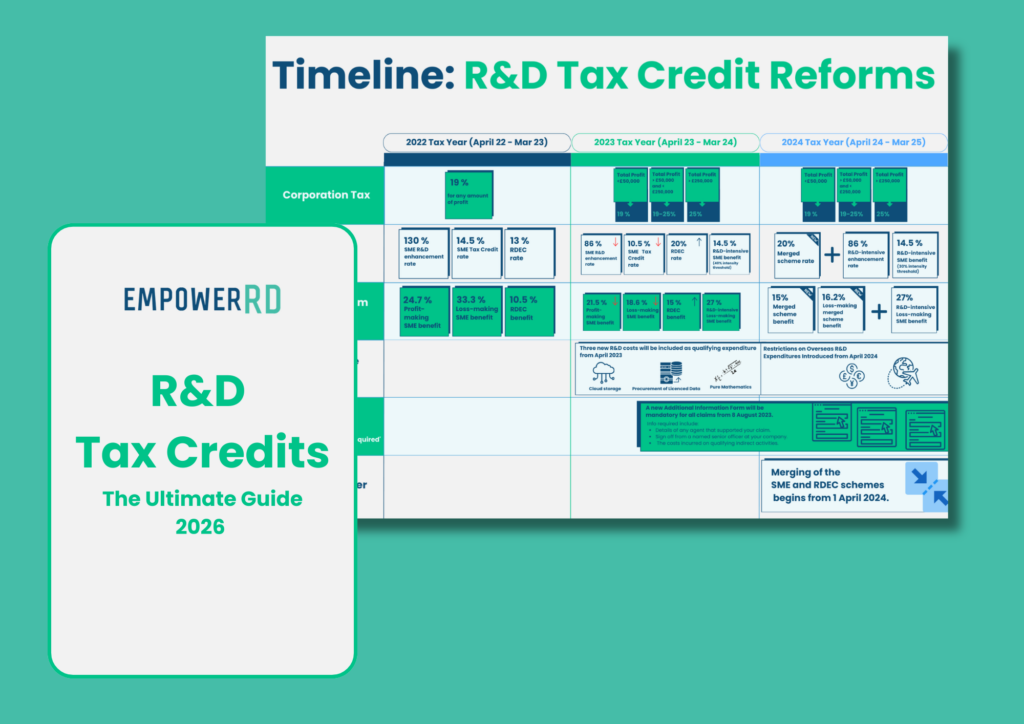
The rate reform introduced from April 2023 did two things simultaneously: it cut the generosity of the SME scheme and increased the rate available under RDEC, the scheme used predominantly by large companies.
The effect shows up clearly in the numbers. SME scheme relief claims fell 29% to £3.15 billion. RDEC scheme relief increased 36% to £4.41 billion. For the first time, RDEC now accounts for more of the total R&D relief pot than the SME scheme. 69% of all qualifying R&D expenditure in 2023–24 was claimed under RDEC.
Large companies claiming under RDEC account for a disproportionate share of the total value. Claims of £1 million and above now represent 54% of total relief claimed, up 11 percentage points on the previous year.
Meanwhile, the smallest claims in the the £15,000 and under band have fallen sharply. These are the claims that represent early-stage companies, growing businesses, the kind of SMEs that R&D tax policy was originally designed to reach and support.
The system is not broken. But it is tilting, steadily and measurably away from the smaller, more innovative end of the market.
The Geographic and Sector Concentration Problem
The concentration is not just between large and small companies. It is also geographic.
London accounts for 24% of all claims and 31% of total relief claimed. Add the South East and East of England, and you have a significant share of the entire scheme concentrated in a corridor running out of the capital. The North, the Midlands, Wales, Scotland all genuinely innovative regions continue to be underrepresented.
Sectorally, Information & Communication, Manufacturing, and Professional, Scientific & Technical together account for 72% of total claims. Those are logical concentrations, but they also suggest that sectors with significant qualifying R&D activity construction technology, agri-tech, food science, fintech outside London are not accessing what they are entitled to at the rate they should be.
The compliance push has undoubtedly contributed to cleaning up the scheme. The mandatory additional information form, introduced in August 2023, was the right call. Fraudulent and error-ridden claims were damaging the system’s credibility. But the blunt effect has been to deter legitimate SME claimants that do qualify, that do invest in innovation, but that lack the internal resource or specialist support to navigate an increasingly complex compliance environment.
What This Means for SMEs Right Now
If you are a growth-stage UK business investing in R&D, these statistics should give you pause — not because the relief is unavailable, but because the system is becoming harder to access without the right support.
The SME scheme still exists. The ERIS route for R&D intensive loss making SMEs spending at least 30% of total expenditure on qualifying R&D offers enhanced support.
But the rate cuts mean that every claim needs to be built more carefully than ever before. A weaker claim that might have been accepted two years ago will face more scrutiny today. The compliance bar is higher. The downside of getting it wrong is steeper.
The businesses that will continue to benefit most from R&D tax relief are those that approach it systematically: tracking qualifying expenditure throughout the year, building a clean audit trail, working with advisers who understand how HMRC scrutinises claims, and structuring the technical narrative in a way that holds up.
That is not a counsel of despair. It is a statement of where the standard now sits.
An Opportunity the Chancellor Should Not Miss
The September 2026 statistics include data from the new merged RDEC and ERIS schemes covering accounting periods from April 2024 will tell us whether the consolidation of the two schemes has helped or hindered SME participation. The direction of travel in the data so far is not encouraging.
Which makes the upcoming Autumn Statement a genuine inflection point.
The Government has made industrial strategy a centrepiece of its economic agenda. It has identified the sectors it wants to back: advanced manufacturing, clean energy, life sciences, digital infrastructure. The businesses doing the most innovative work in those sectors are, disproportionately, SMEs not the large corporations already benefiting from a more generous RDEC rate.
If the Chancellor is serious about using the tax system to support the Government’s industrial strategy, the case for targeted, improved R&D rates for SMEs or at minimum, sector-specific enhanced rates for businesses aligned with priority industries is now well evidenced.
The data shows where R&D investment is growing. It also shows where access to relief is narrowing. Those two trends cannot both continue without consequences for the UK’s long-term innovation capacity.
Cutting rates for SMEs and increasing them for large companies was a policy choice. Reversing that imbalance or at least blunting its effect through targeted intervention is also a policy choice. The Autumn Statement is the moment to make it.
The Bigger Picture
We find ourselves in an odd position. UK R&D expenditure is at a record high. Businesses are investing in innovation. The underlying economic activity that these schemes were designed to reward is genuinely happening.
Yet fewer companies are claiming. The relief is becoming less accessible. And the money is flowing disproportionately to the largest claimants, in the most concentrated geographies, in the established sectors.
That is encouraging and concerning in equal measure. R&D spend growth is good news for the UK economy. But innovation does not only happen in boardrooms with dedicated R&D finance functions. It happens in 50-person SaaS companies in Manchester, in biotech spinouts in Edinburgh, in engineering firms in the Midlands.
Those businesses deserve a system that works for them. Right now, the data suggests it is working less well than it should.
If you want to understand what the current landscape means for your specific claim — whether you are in the SME scheme, claiming under ERIS, or navigating the newly merged RDEC — talk to our team. We work with over 1,400 UK innovators and have delivered more than £400m in successful claims awarded. We will tell you exactly where you stand.
Source: HMRC, Research and Development Tax Credits Statistics: September 2025 — covering data for the tax year 2023 to 2024. Published 30 September 2025. gov.uk