Chancellor Jon Healy’s Autumn Budget 2026 brought some genuinely good news for UK businesses claiming R&D tax relief. There’s going to be a lot less red tape before you file, with the Claim Notification Form being scrapped, and the Additional Information Form (AIF) getting a welcome overhaul to make it simpler.
That’s a positive step forward, but don’t mistake less paperwork for an easier ride. The wider Budget makes it clear that HMRC is actually stepping up compliance, meaning the bar for proving a valid claim is higher than ever.
If you have any questions about the new Budget announcements and how they impact your R&D claim, speak to our team.
Let’s now break down what’s changing, what it means for your business, and how you should navigate it.
Say Goodbye to the CNF From April 2027
The government confirmed that the Claim Notification Form requirement will officially end for R&D claims starting on or after 1 April 2027, with the legislation landing in Finance Bill 2026-27.
This is a big deal. Under the old rules, you had to submit the CNF within six months of your accounting period ending and if you missed that cutoff by even a day, you lost the right to claim relief for that entire period. There were no second chances, no exceptions and no right to appeal.
HMRC’s own figures show that first-time claimants dropped by 43% after the form was introduced. That wasn’t a victory against tax fraud, it was eligible companies missing out on funds they deserved simply because of an administrative trap.
Scrapping the CNF opens the door to more businesses again and the Treasury expects claim numbers to rebound, setting aside around £45m in 2027-28 and up to £70m by 2031-32 to fund it.
The fact that this is categorised as spending rather than tax relief shows HMRC expects a steady stream of payable credits to reach loss-making SMEs.
The Budget hasn’t explicitly clarified whether this applies to accounting periods starting, ending, or claims filed on or after 1 April 2027. Future HMRC guidance will clarify this. If you missed a past deadline, sit tight until the exact rules are released.
The AIF Is Getting Streamlined But Don’t Expect a Free Pass
Starting autumn 2027, the government plans to simplify and streamline the Additional Information Form (AIF).
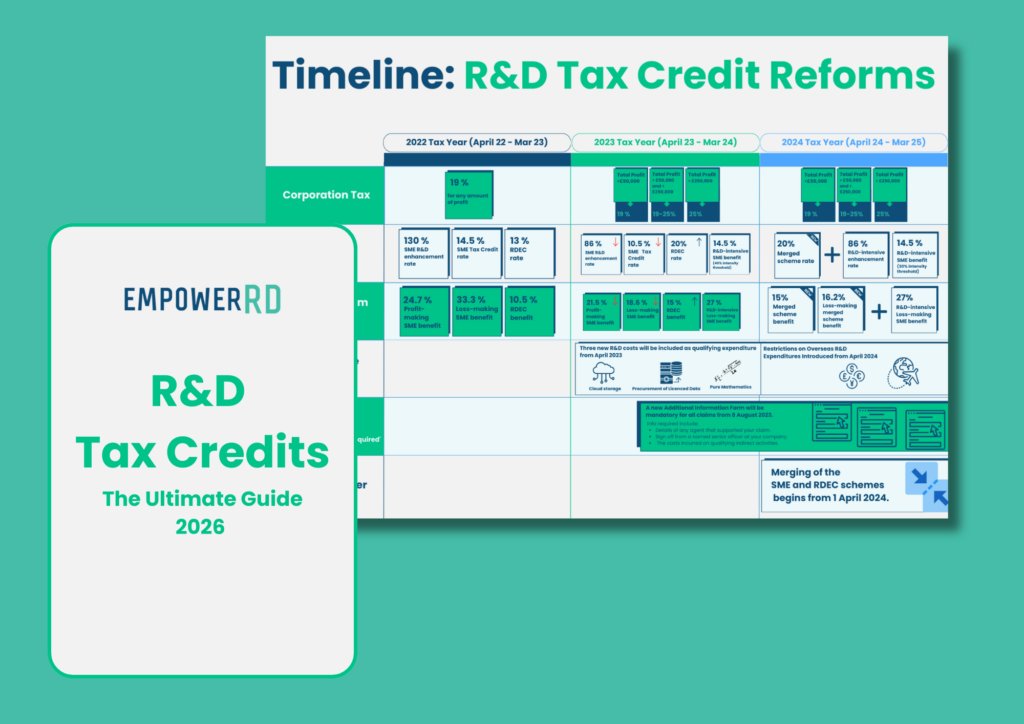
Brought in during August 2023, the AIF is mandatory for all claims. It’s a detailed digital form where you spell out the exact technical hurdles your project faced, who managed the technical work, and get formal sign-off from a senior company officer.
A shorter form means less tedious data entry, which is great news. However, HMRC’s underlying expectations haven’t changed. The rules around merged schemes remain complex, and inspectors still look closely at technical wording and handing out enquiries and penalties for sub-par submissions.
In short: a simpler form won’t save a weak or poorly documented claim from being audited.
Compliance Is Getting Tougher, Not Easier
This is the critical part of the Budget update that deserves equal attention.
HMRC is hiring 670 new compliance officers, adding to the 5,500 already planned by 2029-30.
Audit activity is set to remain high. Concerns around R&D advisory standards have sparked a new intermediary framework coming in spring 2027, designed to guide businesses toward quality advisors, crack down on bad actors, and curb bad advice online.
On top of that, new error-correction rules take effect from 1 April 2028, alongside expanded digital inspection powers meaning HMRC will have easier access to your digital records during an inquiry.
Relief rates and merged scheme structures remain untouched, with Corporation Tax staying at 25%. Overall, the Budget offers greater stability and less admin hopefully increasing greater uptake of the scheme. However alongside these positive measures a far stricter enforcement environment is on the horizon. As has always been the case, a thoroughly well documented claim will often stand up to scrutiny.
How This Affects Your Next Steps
If you previously missed a CNF deadline:
Hold off on taking action for now. Wait until official HMRC guidance confirms the exact start dates. If it applies to claims submitted after 1 April 2027, you might be able to revisit periods you thought were lost. We’ll share updates as soon as they arrive.
If you’re a first-time claimant:
The CNF barrier vanishes in April 2027, but first-time claims still see the highest rate of enquiries. Crafting a solid narrative in your AIF clearly outlining technical advances, challenges, and solutions always remains essential. A shorter form doesn’t change that fundamental requirement.
If you’re a regular claimant:
Scheme rates are holding steady, so your process won’t need major adjustments for 2027. The AIF changes in late 2027 should cut down administrative time, but quality standards remain paramount. With total R&D claims hitting £8.2 billion in 2024/25 (up 5%), Treasury scrutiny is at an all-time high.
The wider outlook:
Expanded compliance teams, advisor regulation, and updated digital access points to one clear goal: ensuring claims withstand thorough reviews, not just initial checks.
EmpowerRD maintains an HMRC enquiry rate under 5% across more than £260m in successful claims, a track record built on robust, fully defensible submissions.
Let’s Discuss How These Budget Changes Impact You
If you want to explore what the removal of the CNF means for your business or if you have previous periods that might now be recoverable feel free to schedule a quick chat with our team.
We’ll help you review your current position, understand upcoming changes, and build a fully compliant, evidence-backed claim under the updated rules.