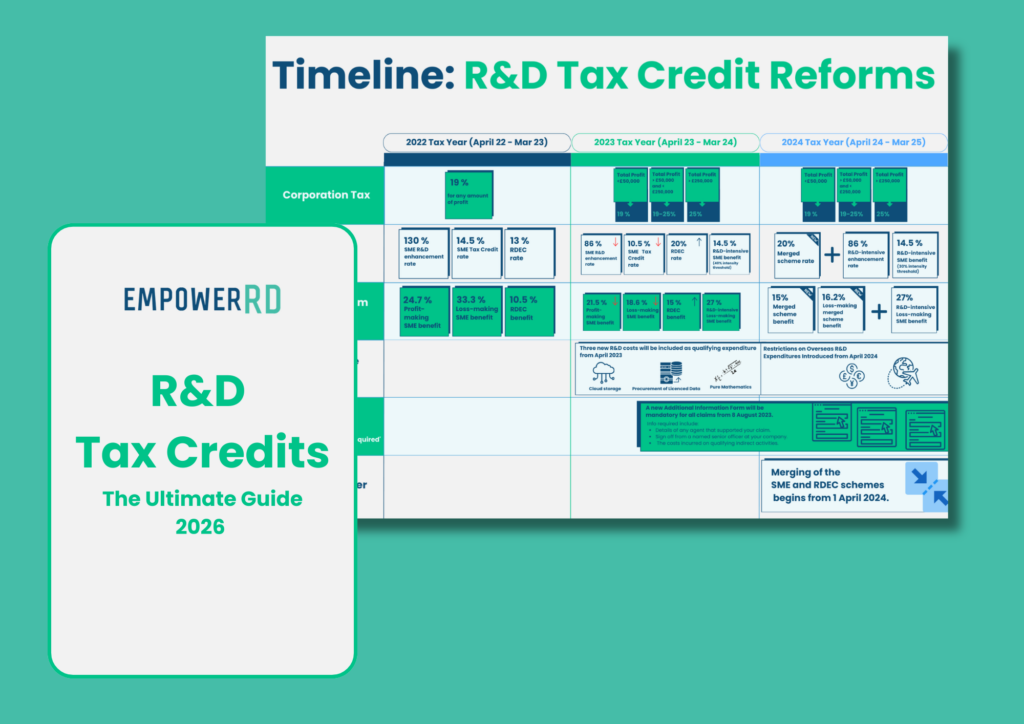
The landscape of R&D tax relief continues to shift, and this afternoon’s Research and Development Communication Forum (RDCF) meeting provided critical updates for UK innovators. From the full rollout of the Merged Scheme to new mandatory registrations for tax advisers, the message from HMRC is clear: they are seeking a “right balance” between rigorous compliance and supporting genuine technical advancement.
Here are the key takeaways from the March 2026 update.
1. The New “Normal”: Merged Scheme & ERIS
The transition period is over. HMRC confirmed that the Merged Scheme (which replaced the old RDEC and SME schemes) and Enhanced R&D Intensive Support (ERIS) are now the established standards.
- ERIS Threshold: The intensity threshold remains steady at 30%, down from 40% in previous years.
- Calculation Scrutiny: HMRC is specifically looking at how groups with connected companies calculate this threshold. For these groups, intensity must be calculated by totaling figures across all connected entities using a consistent methodology.
- QIPs Warning: HMRC confirmed that RDEC is classed as taxable income. This can push companies into the “large” payment regime for Quarterly Instalment Payments (QIPs) earlier than expected.
2. A Move Toward Certainty: The Advance Assurance Pilot
In a welcome move to combat the “file and hope” model, a targeted Advance Assurance pilot will launch in Spring 2026.
- Purpose: To provide SMEs with certainty before they formally file a claim.
- Scope: You can seek clearance on up to two specific aspects, such as whether a project meets the R&D definition or how overseas expenditure is treated.
- Eligibility: Crucially, this is open to all SMEs, including those who have claimed before or have faced previous rejections.
3. Operational Pragmatism & Technical Support
HMRC is evolving its internal expertise and its approach to administrative errors.
- Expert Advisory Panel (RDEAP): This panel of industry specialists in AI, Life Sciences, and Manufacturing is now active, helping HMRC caseworkers understand complex technical uncertainties.
- Typos in the AIF: In a win for common sense, HMRC will now take a pragmatic approach to minor typos in the Additional Information Form (AIF). Errors in UTR numbers or dates that previously triggered automatic rejections can now be corrected through representations.
- Northern Ireland Compliance: Claimants in NI must now declare State Aid through the European Commission (eAIR) Register to comply with the Windsor Framework.
4. Trends: Fewer Claims, Higher Value
The data shows a significant shift in the R&D market. The volume of claims dropped from 61,000 in 23/24 to 51,000 in 24/25. However, total expenditure rose to £8.2 billion. This suggests that while there are fewer claimants, the claims being made are larger, more technical, and more complex.
HMRC is meeting this complexity by centralising R&D compliance within the Wealthy and Mid-sized Business Compliance (WMBC) unit to ensure specialized oversight.
5. AI: Tool vs. Innovation
HMRC addressed the “AI elephant” in the room. While they are using AI internally—giving staff access to Microsoft Co-Pilot and trialing an “R&D Summariser Tool”—human caseworkers still make the final decisions.
For claimants, the warning is clear: using AI is not the same as advancing AI. To qualify for relief, a project must resolve a technological uncertainty within the field of AI itself, rather than just applying existing AI tools to a business problem.
6. Mandatory Tax Adviser Registration
Perhaps the most significant administrative change is the requirement for all agents to register with HMRC.
- Key Date: Mandatory registration begins 18 May 2026.
- Who it affects: Any business providing tax services or interacting with HMRC on behalf of clients, including those submitting R&D claims.
- Deadlines: Existing advisers with a Self-Assessment or CT online account must register by 18 August 2026.