In response to the announcement of a simplified, single RDEC-like R&D tax credit scheme in the Autumn Statements, HMRC has initiated an 8-week consultation.
On 13 January 2023, HMRC opened the 8-week consultation period, which will conclude on 13 March. This proposal outlines how a single scheme could be designed and executed efficiently, replacing the two current R&D tax relief schemes – the Research and Development Expenditure Credit (RDEC) and the Small-and-Medium-Enterprise (SME) – with a single RDEC-like scheme.
What is HMRC’s justification for a single RDEC-like scheme?
The consultation suggests that an RDEC-based model would make the process easier and give SMEs stronger certainty around claim value, calling attention to the fact that the UK is unusual in operating two schemes.
It notes that with the RDEC scheme, business owners know exactly how much they will receive in tax credits before their accounting period ends. In contrast, SME claimant companies can only be sure of their claim’s exact value once all accounts are finalised.
It also highlights that in some circumstances, companies can claim under the RDEC and SME for the same or different projects. One scheme would simplify the process for these claimants.
The consultation comes after a range of reforms to prevent abuse
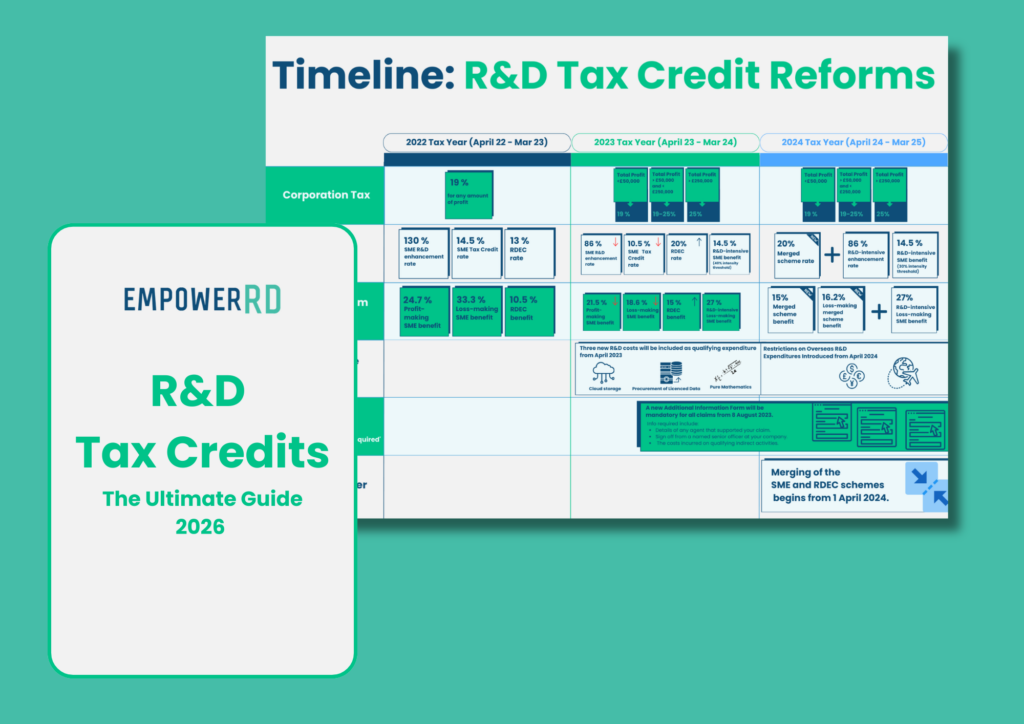
After recognising a rise in fraud and abuse in the SME scheme, the government implemented various reforms. The standout headline from the 2022 Autumn Statement was the decision to adjust the rates for the two R&D tax relief schemes – decreasing the SME deduction and credit rate and increasing the RDEC rate.
These rate adjustments bridge the gap between the two current schemes, which will help if HMRC decides to merge the two schemes.
Most of the reforms are due to take effect in April 2023. To read more about the upcoming reforms, read our extensive guide here.
Does the consultation cover the new rate for the single scheme?
No. The consultation does not include setting a new rate for the single scheme. However, this will be determined after further review and announced in a future fiscal statement.
However, the government acknowledges that the reform to the rates creates challenges for R&D-intensive SMEs and those in the life sciences sector. In fact, they suggest there might be merit in giving these businesses a bigger incentive due to their unique circumstances.
Other areas the consultation focuses on include:
- How to manage subcontracting costs in a merged scheme.
- How the PAYE & NICs caps may work in the new merged scheme.
- Whether a minimum expenditure threshold should be re-introduced.
When will the scheme merge if it’s approved?
If the R&D tax relief schemes are merged, the consultation suggests that this should apply to accounting periods starting on or after 1 April 2024.
EmpowerRD’s take
It’s encouraging to see that HMRC is trying to address fraud and abuse of the scheme and that they want to continue investing in innovation. However, with so many alterations to the scheme, claimant companies will need to expend an enormous time and resources to navigate the upcoming changes. If not treated correctly, this rate of change could very well cause confusion, panic and error.
This is especially true when it comes to the SME scheme. Once the rate deductions and possible merging of new schemes have taken place, small to medium-sized enterprises will need comprehensive assistance and direction in navigating the potential pitfalls.
It is a promising sign that the government acknowledges that R&D-intensive SMEs need more support, and we welcome further consideration for these claimant companies.
As usual, EmpowerRD will speak to clients and relevant stakeholders about the potential impact of the proposed scheme consolidation and respond fully to HMRC during the consultation period.
Seeking a trusted partner to help you build your R&D tax claim?
We’re here to help. Over 900 UK companies have trusted EmpowerRD’s R&D platform and specialists to help them build optimised, compliant R&D tax claims. Please get in touch with one of our experts today to learn more about how we can help your company.